The following art works are related to action and athleticism. A major portion in art’s history is related to action, hunting, boxing, olympic sports and many other athletic games.
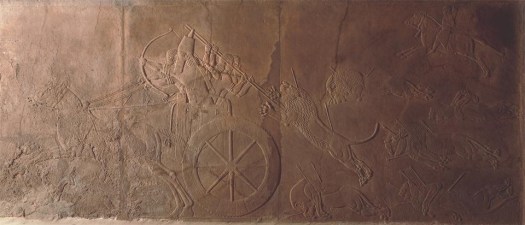
Title: Ashurbanipal Hunting Lions
Date: 645-640 B.C.E.,
This relief shows Ashbabanpur hunting a lion. Ashbabanpal was an Iranian leader. Assameses is great representation with their great power. Shirin is a representative of nature, and as a murderer, they appear to have power over nature, and thus prove to be very strong.
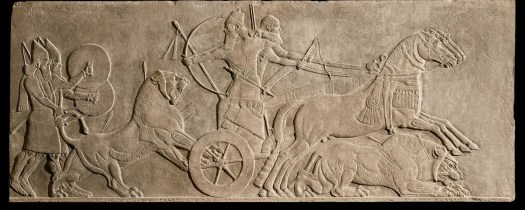
Title: Detail of Assurnasirpal II Killing Lions.
Date: C. 875-860 BCE.
Height: 39”
Current Location: British Museum, London
The figure is currently located in British Museum, London. It shows one of the many practices of the Assryians. The Assryians performed several different religious ceremonies. Amongst these religious practices was a ceremony known as the Lion Hunt. The Assryians saw lion hunting as a royal virtue in par with celebrating victories from wars. Lion hunting showed the strength of the ruler. It is a composite perspective art piece which means the image slightly sticks out of the canvas making it three dimensional. Even though this type of Art Work has been seen in the Egyptian culture, it is still different. When Egyptians created their art work, their lines were always rigid and straight. n This differed from the Assyrians because they showed curves in their lines and human movement.
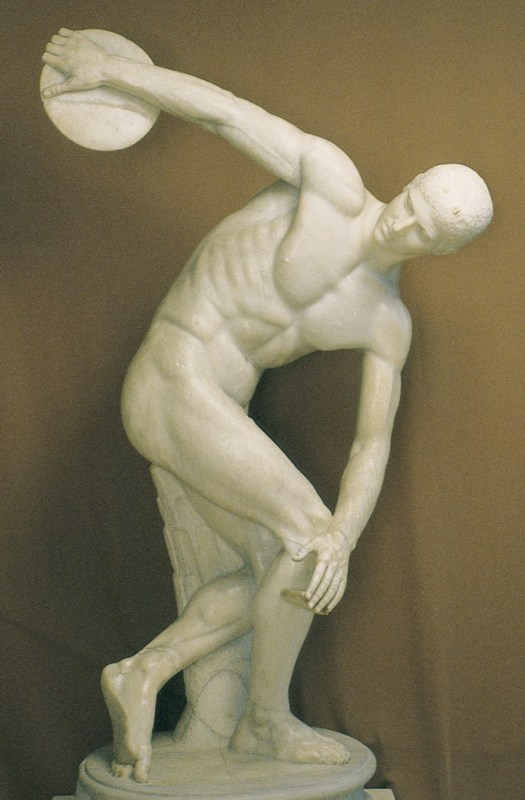
Artist: Myron
Title: The Townley Discobolus
Date: 2ndC
Dimensions: Height= 1690 millimeters
Width= 1050 millimeters
Depth= 630 millimeters
Current Location; Great Russell St, Bloomsbury, London WC1B 3DG, UK (The British Museum)
This statue is known as the Townley Discobolus. The Artist of the Townley Discobolus is Myron. He was an Athenian sculptor from the mid-5th century BC. The height of this figure is 1690 millimeters, width is 1050 millimeters and the depth is 630 millimeters. The current location of The Townley Discobolus is in UK at The British Museum. The person in the figure has a muscular body and he is in the motion of throwing a disc. He has his arms swung all the way back and you can tell by that simple movement that the disc will be thrown with a great force. He is showing great balance by his position. He is hunched over and his feet and knees are creating balance for him so he does not fall over.
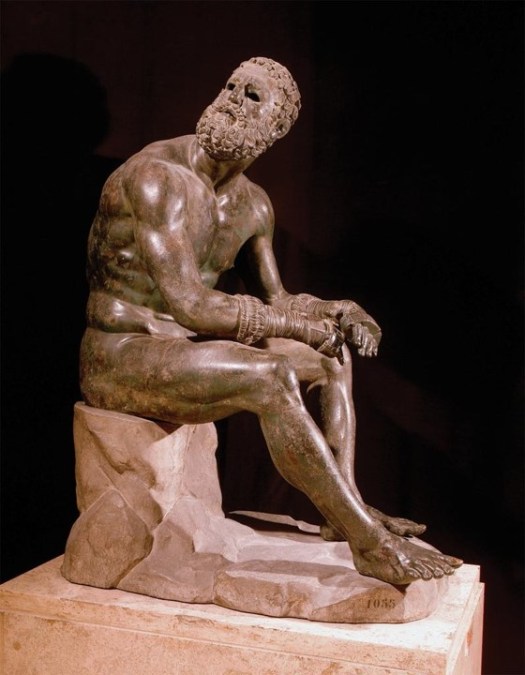
Artist: (Hellenistic Greek)
Title: Apollonius, Boxer at Rest
Date: c.100-50 B.C.E.,
Dimensions: 4 feet and 2.5 inches
Current Location; Museo Nazionale Romano (Rome)
This art work is Apollonius, Boxer at Rest. This art work is from the Hellenistic Greek era. The dimensions of this Art Work is 4 feet and 2.5 inches. The current location of the figure is in Museo Nationalize Romano (Rome). It was excavated in Rome in 1885. He is sitting down in a hunched condition and he is looking at the right side. It seems that he is feeling proud and he just won something. He has a very muscular body. He has a beard and he has long hair. The many wounds to his head, the primary target in ancient Greek boxing matches, make clear that he has just completed a match. His right eye is swollen and bruised. His nose is broken and you can see and tell by his noose that his nose was bleeding. The muscles in his arms and legs are still tense.
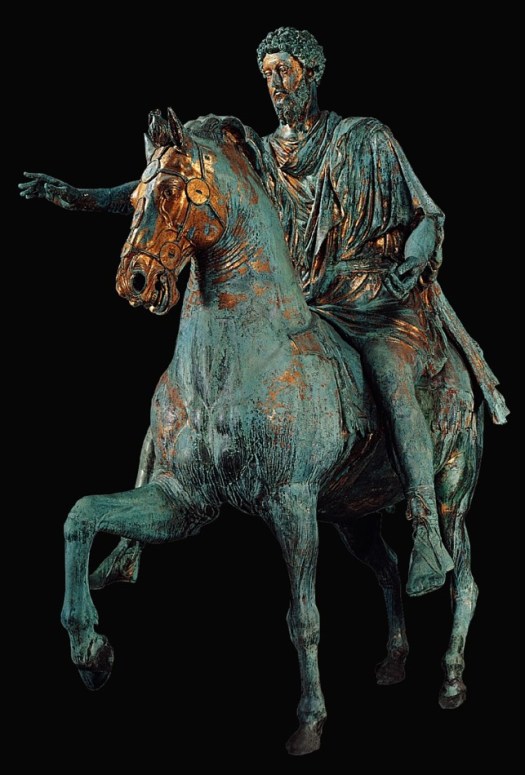
Title: Equestrian Statue of Marcus Aurelius
Date: c. 175 C.E.
Dimensions: 13 feet and 9 inches
Current Location; Roma, Italy
This is the statue of Equestrian Statue of Marcus Aurelius. Marcus Aurelius was the emperor of Rome from 161-180 CE. He was also a philosopher and intellectual. The dimension of this figure are 13 feet and 9 inches. The current location of this figure is in Roma, Italy. Originally it was thought to be statue of Constantine and thats the reason it wasn’t destroyed. The statue of Marcus Aurelius exhibits many similarities to that of Augustus. He has his hand out just to show that he has some power and good authority. It is believed that there was a body under the horse’s lifted leg. However, over time the body either was destroyed or was detached from the statue. Even though the artist is unknown, It is clear that they were good at their job. You can tell this by the amount of detail in the sculpture of Marcus himself and the horse.

 Art Work in Action